
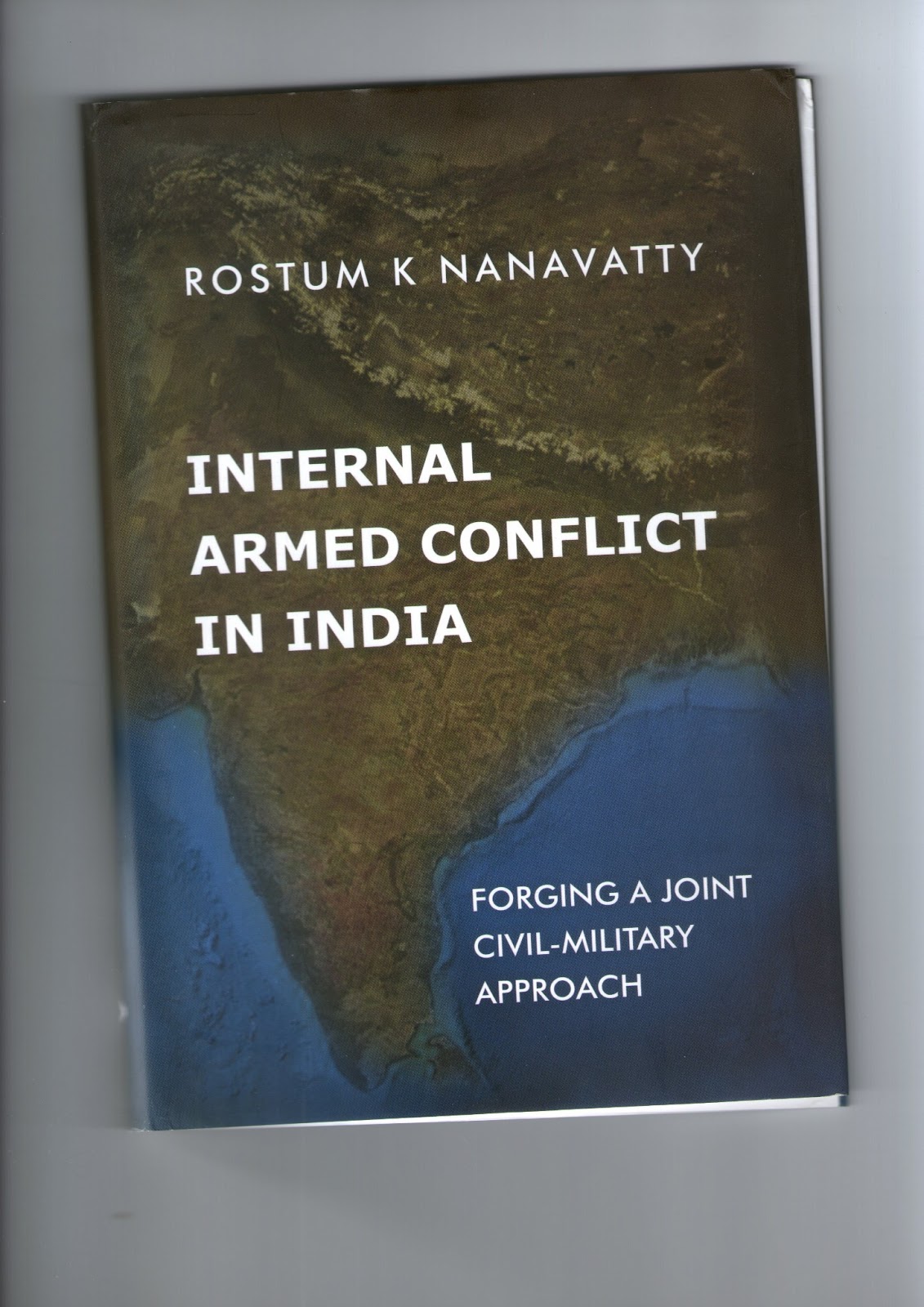
 Of course several books, working papers and longish monographs have been written on past counter-insurgency campaigns, police actions and targeted killings or capture of high profile individuals. However, a comprehensive volume on a possible joint approach to tackling internal armed conflicts in India in the future was waiting to be written. And there are very few individuals as qualified as Rostum K. Nanavatty to have undertaken this important task. His experience in counter-insurgency is as good as any one commissioned in the Indian Army in the immediate aftermath of the 1962 war. Consider Rustom Nanavatty’s stints in his 41 year career: As regimental officer deployed in the northeast; Commander Parachute Commando Task Force, Sri Lanka (1987-88), Commander 102 (Siachen) Brigade, GoC, 19 Division in Baramulla, GoC, 3 Corps in Dimapur, Nagaland and finally Northern Army Commander!
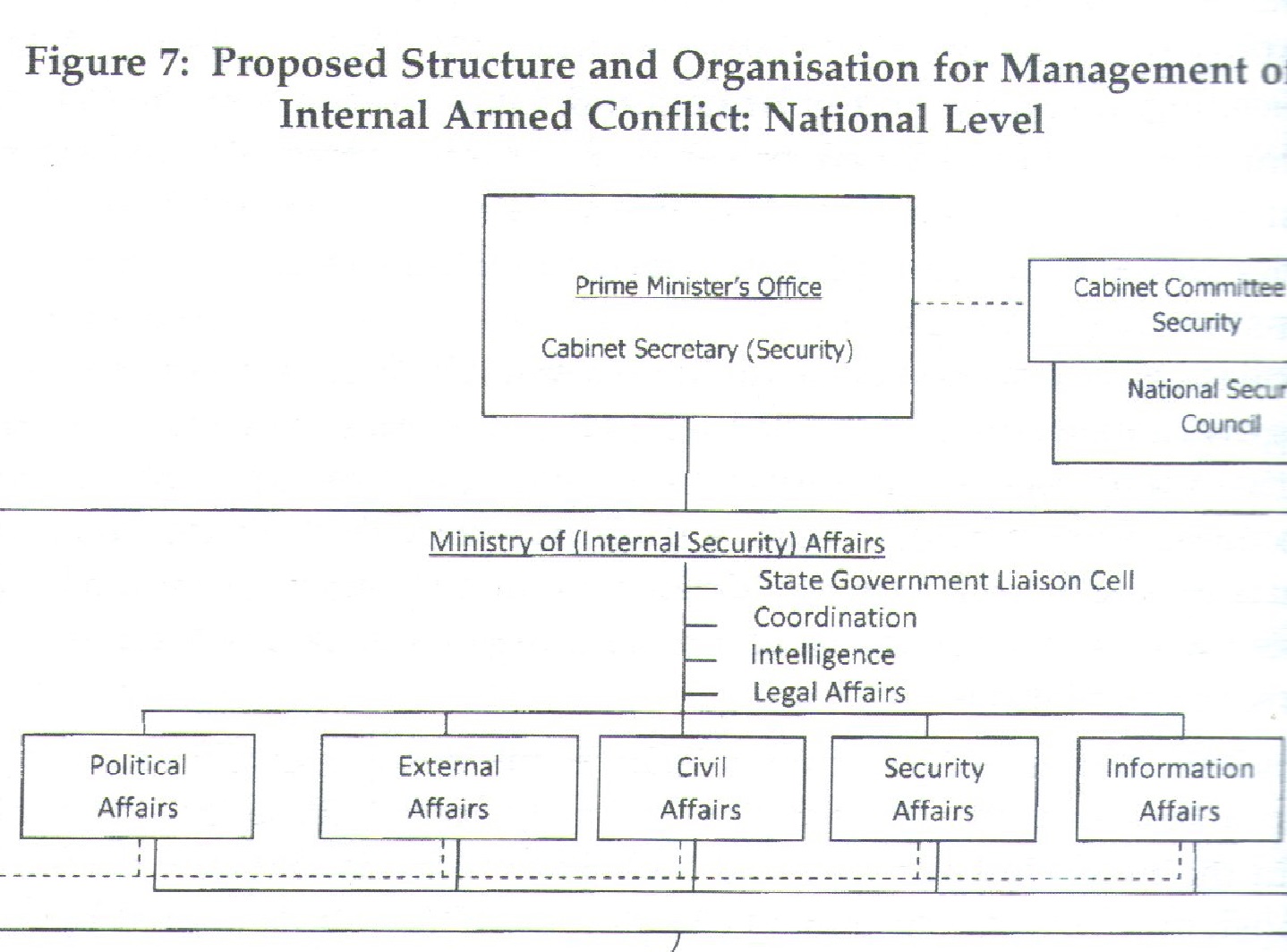 |
| Fig 1. |
He has hit the nail on the head! After every major incident, Indian authorities have rushed to either create new force or expand the old ones effectively blunting their edge. After the November 26, 2008 attack on Mumbai, for instance, the effectiveness of the NSG (the National Security Guard), supposed to be the most potent anti-terror, anti-hijack force in the country, has been compromised by mindlessly expanding its numbers and spreading it thin instead of equipping it with latest weapons and platforms. As a result today the NSG finds it difficult to make up the requisite numbers without compromising on quality. Similarly, state governments have raised ‘specialised’ forces to tackle terrorist attacks. But they are at best, fittest policemen available in a given force dressed in a different uniform! So we have a surfeit of Greyhounds, Jaguars, COBRAS masquerading as ‘special forces,’ when in reality neither their training nor their equipment is in keeping with the requirements of truly potent anti-terrorist forces!
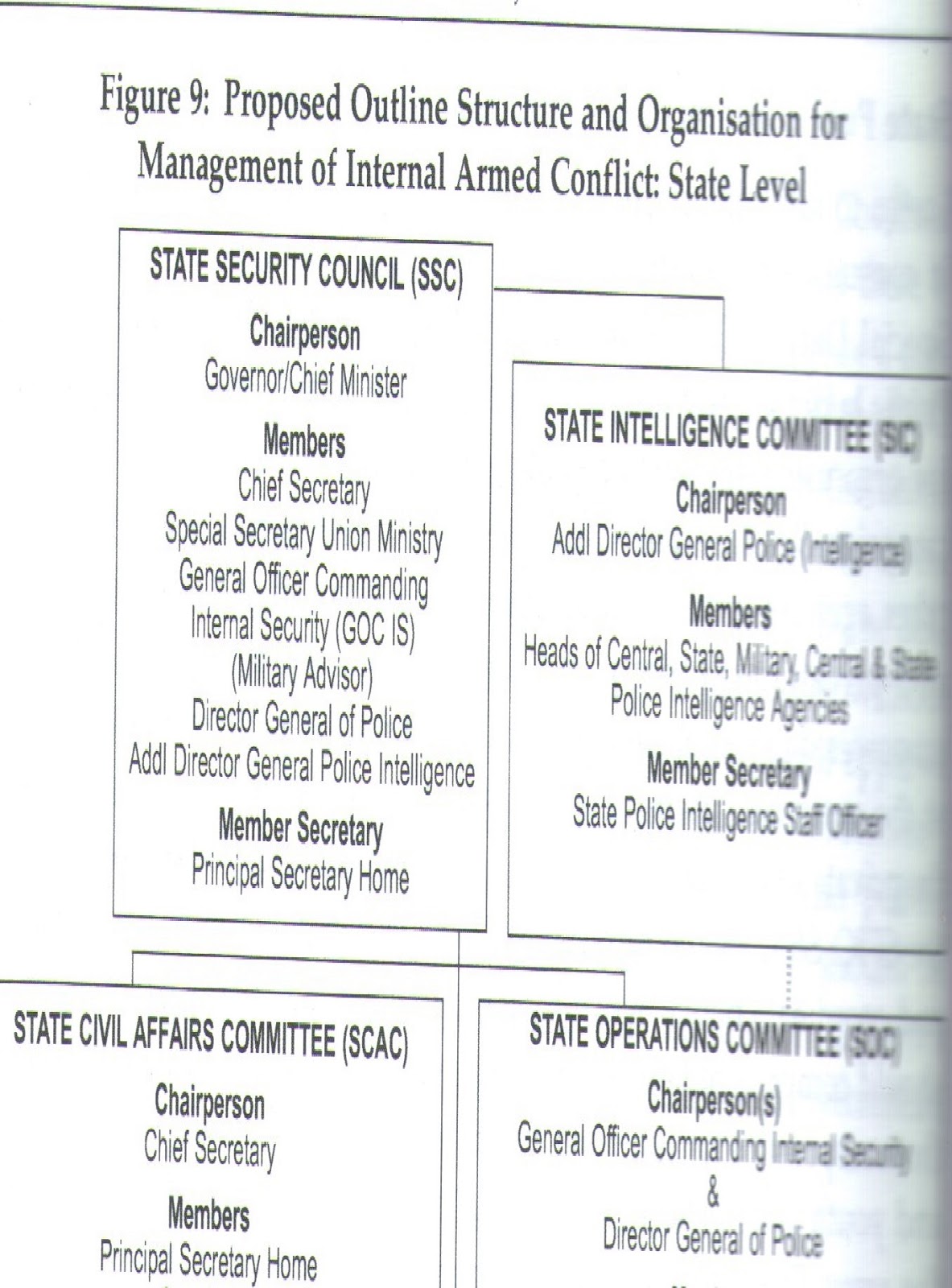 |
| Fig 2 |
With Left Wing Extremism (LWE) or Maoist violence as we more popularly know it, threatening to escalate in coming years, Gen Nanavatty’s book, full of practical and sagacious suggestions, comes at the most appropriate time. Despite being a successful military commander, Gen Nanavatty has avoided the usual mistake of portraying the army as the paragon of virtue and all others agencies as incompetent. He instead offers several interesting insights and practical suggestions on how to improve and institutionalise civil-military cooperation in insurgency affected areas. Again a must read for all students and practitioners of counter-insurgency, counter-terrorism in India.
Comments
Anonymous
The problem lies in ability to match the evolving threats. The basic question of governance and accountability is lacking as there are fiefdoms in the political and bureaucratic arena. This is of course manifested by vote bank politics. Unless these basic issues are addressed no amount of restructuring is likely to help.
Anonymous
HAS MMS AND HM READ IT.